
Running looks simple from the outside: lace up, head out, and keep moving. But anyone who runs consistently knows small details can shape the entire experience. Shoes, socks, hydration, weather, and visibility all matter—and eyewear is often one of the most overlooked pieces of gear.
The right pair of sunglasses can make a morning jog, weekend long run, or trail workout feel smoother, safer, and more comfortable. They reduce glare, shield your eyes from wind and debris, and help you stay focused when conditions change.
Why Regular Sunglasses Are Not Always Enough
A casual pair of sunglasses might work for walking around town, but running puts eyewear through a different kind of test. Your body is moving, your face is sweating, and your surroundings may shift quickly from shade to direct sun.
Good running eyewear should stay secure without feeling tight. It should protect your eyes without bouncing, sliding, fogging, or distracting you mid-stride. When sunglasses are poorly suited for running, they can become more annoying than helpful.
Common problems include:
- Frames slipping down the nose
- Lenses fogging during humid runs
- Heavy frames causing pressure points
- Poor coverage from side glare
- Lenses that are too dark for changing light
- Arms that interfere with hats or headphones
The goal is not just to block sunlight. The goal is to support clear vision from start to finish.
Visibility Can Affect Performance and Safety
Runners constantly read their environment. Cracks in sidewalks, uneven trails, puddles, traffic, cyclists, roots, and curbs all require quick visual awareness. Harsh glare can make these obstacles harder to spot.
This is especially important during early morning or late afternoon runs, when the sun may sit low on the horizon. Reflections from pavement, cars, water, or windows can create uncomfortable brightness that strains the eyes.
That strain may seem minor at first, but over several miles it can contribute to fatigue, which can affect overall fitness, health, and wellness during outdoor training. When your eyes are relaxed, your posture, pace, and focus often feel more natural.
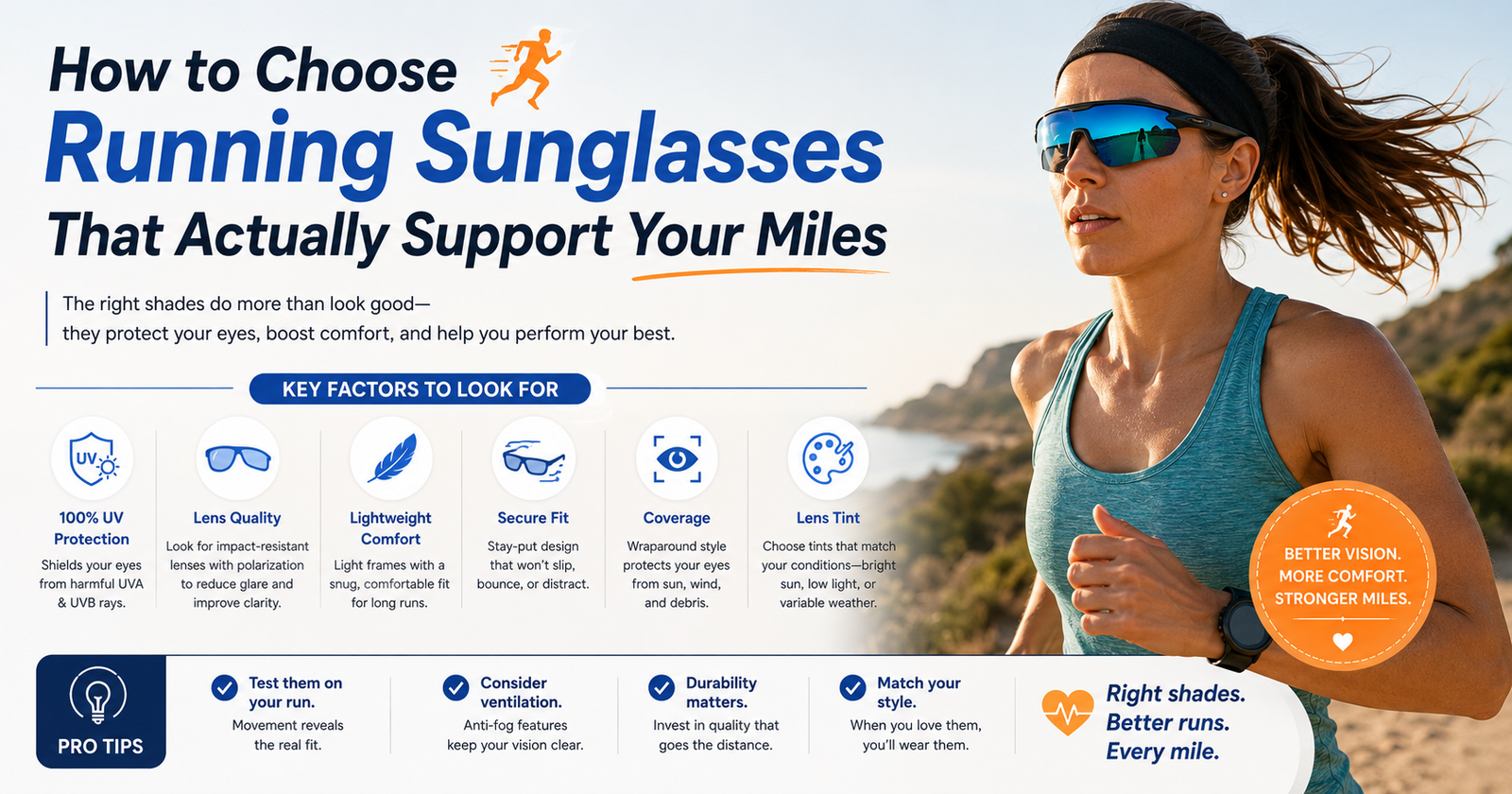
Features That Matter Most in Running Eyewear
Not every runner needs the same frame style, but several features are worth prioritizing before choosing a pair.
Lightweight Construction
Running sunglasses should feel almost invisible once they are on your face. Lightweight frames reduce pressure and make it easier to stay comfortable over longer distances.
Secure Fit
A stable fit is essential. Look for frames that grip gently without pinching. Wraparound or sport-inspired designs often help reduce bounce and provide better side coverage.
UV Protection
Outdoor runners spend a lot of time exposed to sunlight. UV protection should be considered a baseline feature, not a bonus.
Lens Tint
Lens color can affect how well you see in different conditions. Darker lenses work well in bright sun, while amber or rose tones can improve contrast on trails or cloudy days.
Polarization
Polarized lenses can help reduce glare from roads, water, and other reflective surfaces. For runners who spend time near beaches, lakes, wet pavement, or open streets, this can be especially useful.
Matching Sunglasses to Your Running Style
A runner training for a road race may need different eyewear than someone who enjoys wooded trails or casual neighborhood loops. Thinking about where and when you run can help narrow your options.
Road runners often benefit from lightweight frames, glare reduction, and a secure fit that works with hats or earbuds. Trail runners may want more coverage to protect against branches, dust, and shifting light. Runners in hot climates should prioritize ventilation and anti-fog performance.
For those comparing practical options, sunglasses for running can be a useful category to explore because it focuses on eyewear designed around movement, outdoor visibility, and active comfort.
How to Test Whether a Pair Is Run-Ready
Before committing to a new pair, try a few simple checks. You do not need a complicated process—just pay attention to how the sunglasses behave when your body is in motion.
Use this quick test:
- Put them on and shake your head gently from side to side.
- Jog in place for 20 to 30 seconds.
- Bend forward as if tying your shoe.
- Check whether the lenses fog after a few minutes.
- Wear them with your usual running hat, visor, or headphones.
- Look toward the side to see whether the frame blocks your peripheral vision.
If the sunglasses slide, pinch, bounce, or distract you during this short test, they may become frustrating during a real run.
Weather and Terrain Should Influence Your Choice
Running conditions are rarely identical every day. Bright summer sun, overcast mornings, windy afternoons, and shaded trails all create different visual demands.
For open roads, glare control and UV protection are especially valuable. For trails, contrast and coverage matter more because uneven ground can appear suddenly. For coastal or lakeside routes, polarization may help manage reflected light. For humid climates, ventilation becomes critical.
It can also be helpful to own more than one lens type if you run in a wide range of conditions. A darker lens may be ideal for midday runs, while a lighter tint may work better for cloudy routes.
Comfort Encourages Consistency
The best running gear is the gear you actually use. Sunglasses that look good but feel uncomfortable will eventually stay in a drawer. A pair that feels stable, clear, and light can become part of your normal routine.
Comfort is especially important for longer runs. Small pressure points around the nose or temples may not bother you during the first mile, but they can become distracting later. A good fit should feel secure without demanding your attention.
Conclusion
Running sunglasses are more than a style choice. They help protect your eyes, improve visibility, reduce glare, and keep you focused across changing outdoor conditions. Whether you run on roads, trails, beaches, or neighborhood paths, the right eyewear can make each mile feel more comfortable and controlled.
By focusing on fit, lens quality, coverage, and comfort, runners can choose sunglasses that support both performance and enjoyment. Small gear upgrades often make the biggest difference when they remove distractions—and quality eyewear does exactly that.