Manga has become a global reading experience. A story created in Japan, Korea, China, or another region can reach readers around the world through online communities, digital comic platforms, social media, fan discussions, and creator updates.
Even when readers do not understand the original language, the artwork often communicates emotion immediately. A character’s facial expression, an action scene, a quiet romantic moment, or a dramatic panel can be understood at first glance.
But manga is not only visual art. Dialogue, captions, sound effects, side notes, and character speech patterns carry important meaning. Without understanding the text, readers may follow the mood of a scene but miss the humor, tension, emotional detail, or story context behind it. This is why manga translation has become increasingly important for global readers.
Traditional translation tools work well when the content is plain text. A user can copy a paragraph from an article, paste it into a translator, and read the result in another language. Manga is different because the words are part of the image. Text appears inside speech bubbles, narration boxes, vertical columns, sound effects, and small background notes. Some text may be stylized, handwritten, curved, or placed over detailed artwork.
This makes manga translation more complicated than ordinary text translation. The first challenge is not only language conversion. The text must first be detected inside the image. After that, the translation must preserve meaning, tone, and readability. Finally, the translated text should fit naturally into the visual layout of the page.
Read More: Solo Leveling Manga: The Story That Changed the Way We Read Manga
AI-assisted manga translation tools are becoming useful because they can reduce the manual work involved in the first stage of this process. Instead of typing every line from a manga page into a translator, readers and creators can use tools that help detect text from images and generate a translated draft more quickly. A platform such as AI Manga Translate is designed around this type of visual translation workflow, where manga pages, comic images, and image-based files need more than simple copy-and-paste translation.
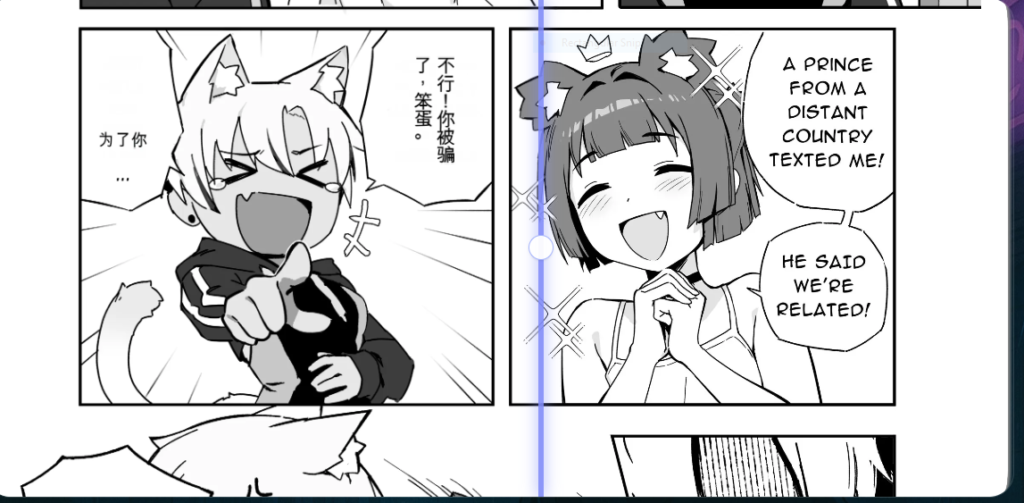
The first important technology in this workflow is OCR, or optical character recognition. OCR helps identify text inside an image and convert it into readable text. In a clean document, OCR is usually straightforward because the words appear in neat lines on a plain background. Manga pages are more complex. Text can be vertical, small, stylized, curved inside speech bubbles, or mixed with artwork. This is one reason manga-focused OCR and translation workflows are different from standard document translation.
After OCR, translation becomes the next step. AI translation can create a fast first draft, which is helpful for readers who simply want to understand what is happening in a page or panel. For example, a reader may find a manga screenshot in a discussion and want to know what the characters are saying. A quick translation can make the scene easier to follow without requiring the reader to manually type every line.
However, manga translation is not only about literal meaning. Dialogue often depends on character personality, emotional tone, humor, cultural context, and story timing. A sentence may be technically correct but still feel unnatural if it does not match the character’s voice. A shy character, a sarcastic character, and a formal character should not all sound the same in translation. This is why human review still matters, especially when the goal is a polished or public-facing result.
Layout is another major challenge. A short phrase in Japanese, Korean, or Chinese may become much longer in English or another language. If the translated sentence does not fit inside the original speech bubble, the page may become crowded or hard to read. Sometimes the wording needs to be shortened. Sometimes the font size, line breaks, or text placement must be adjusted. In visual storytelling, readability depends on both language and design.
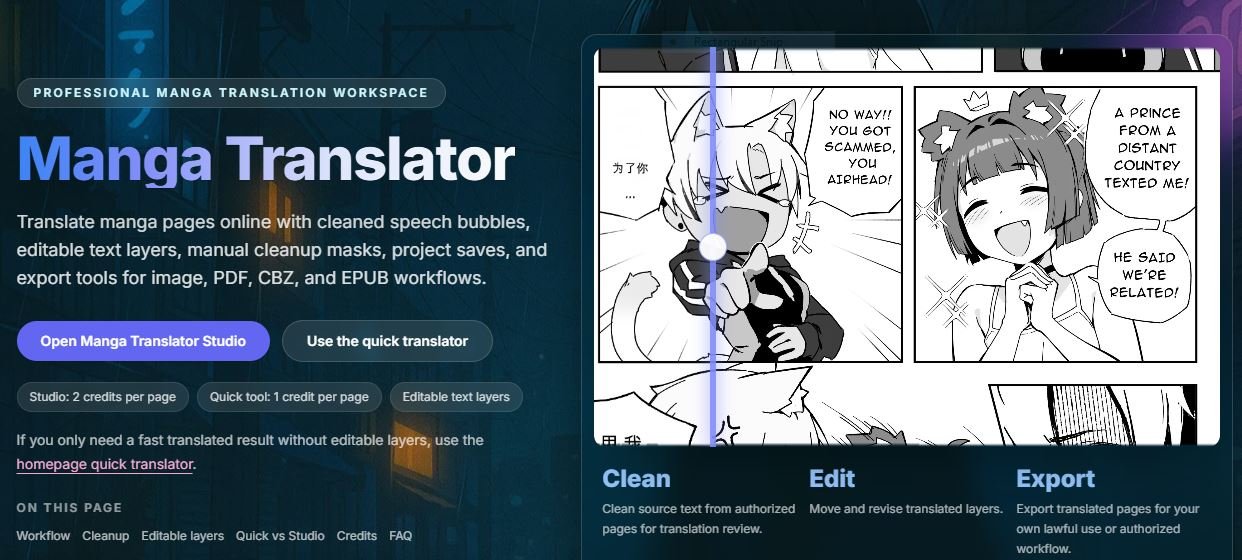
This is where an editor-style Manga Translator workflow becomes useful. Instead of only producing a quick automatic translation, a more complete workspace can let users review detected text, adjust wording, clean speech bubbles, move text layers, resize translated text, save projects, and export cleaner pages. This type of workflow gives users more control over the final reading experience.
Different readers need different levels of control. A casual reader may only want to understand a single panel or a short webtoon screenshot. A language learner may want to compare the original dialogue with a translated version. A creator may want to test how a comic page reads in another language before preparing a full localization. A translator or editor may need a draft that can be reviewed, rewritten, and improved before final use.
Read More: Best Places to Read Uncensored Manga (Safe & Legal Options)
For casual manga fans, AI translation can lower the first language barrier. It can help readers understand the basic meaning of a foreign-language page more quickly. This does not mean every translation will be perfect. It means the reader can move from complete confusion to a readable draft, which can then be checked or refined if needed.
For language learners, manga translation can also be useful. Manga often gives strong visual context. A learner can connect words with expressions, actions, and scenes. When the original text and translated meaning are compared carefully, the reading experience can become a practical way to study vocabulary, tone, and sentence structure. Visual storytelling makes language feel less abstract.
For creators, AI-assisted translation can support early testing. An independent comic artist may want to see how a page reads in another language. A small team may want to prepare a draft before asking a human editor to polish it. AI can help speed up the first pass, especially when the source is an image and the text cannot be copied directly.
For translators and editors, AI can reduce repetitive work. Detecting text, preparing a draft, and organizing lines can take time. If AI helps with these first steps, human editors can spend more energy on tone, context, pacing, and final quality. In this sense, AI does not replace skilled translation work. It supports the workflow.
It is also important to understand the difference between quick reading and polished translation. A quick translation may be enough when someone wants to understand a page for personal study. A polished translation requires more care. It needs proofreading, tone adjustment, layout control, and sometimes rewriting. Manga translation is a layered process, and the best results often come from combining AI speed with human judgment.
Responsible use is essential. AI manga translation tools should be used for content that users own, created, licensed, or have permission to process. They can support personal study, creator-owned drafts, authorized localization, internal review, and translation practice. They should not be used to distribute unauthorized copyrighted manga or replace official releases. Respecting creators, publishers, and rights holders is an important part of using translation technology properly.
As manga, manhwa, webtoons, and digital comics continue to reach global audiences, translation will become part of the reading journey for more people. Some readers will use AI tools for quick understanding. Others will use them for study, editing, or localization support. The strongest tools will not only translate words but also help preserve layout, emotion, and reading flow.
Manga translation is more than changing one language into another. It is about helping readers experience the story while keeping the page clear, natural, and enjoyable. That is why AI-assisted manga translation is becoming a practical tool for global manga readers, creators, and translation workflows.