The global appetite for manga, manhwa, and webtoons has never been more insatiable. What was once considered a niche subculture in the West has exploded into a mainstream phenomenon, dominating entertainment consumption from London to Los Angeles.
With the massive success of platforms like Webtoon and Tapas, alongside traditional manga publishers embracing digital simulpubs, a new generation of fans doesn’t just want to read stories—they want to create them.
However, the barrier to entry in visual storytelling remains notoriously high. For every brilliant artist capable of drawing intricate mecha suits or breathtaking fantasy landscapes, there are a hundred passionate writers who possess incredible stories but cannot draw a simple stick figure.
This historic divide between the “writer” and the “artist” has left countless amazing light novels, fan-fictions, and original character (OC) concepts trapped purely in text.
But as we navigate through the digital renaissance of the 2020s, a new set of creative tools is fundamentally changing how stories are visualized.
Artificial intelligence is stepping in, not to replace the revered mangaka, but to act as the ultimate collaborative assistant, democratizing the creative process for indie storytellers across the globe.
Overcoming “Blank Page Syndrome” in Character Design
Every great manga begins with a compelling cast of characters. For a writer attempting to pitch a script to an artist, or an indie creator trying to visualize their protagonist, relying on text descriptions like “spiky red hair with a dystopian cyberpunk jacket” often leads to misinterpretation.
In the past, writers would have to spend hundreds of pounds commissioning character reference sheets just to get a baseline visual. Today, generative AI has eliminated this financial and temporal hurdle. By engineering specific text prompts, creators can instantly breathe life into their textual descriptions.
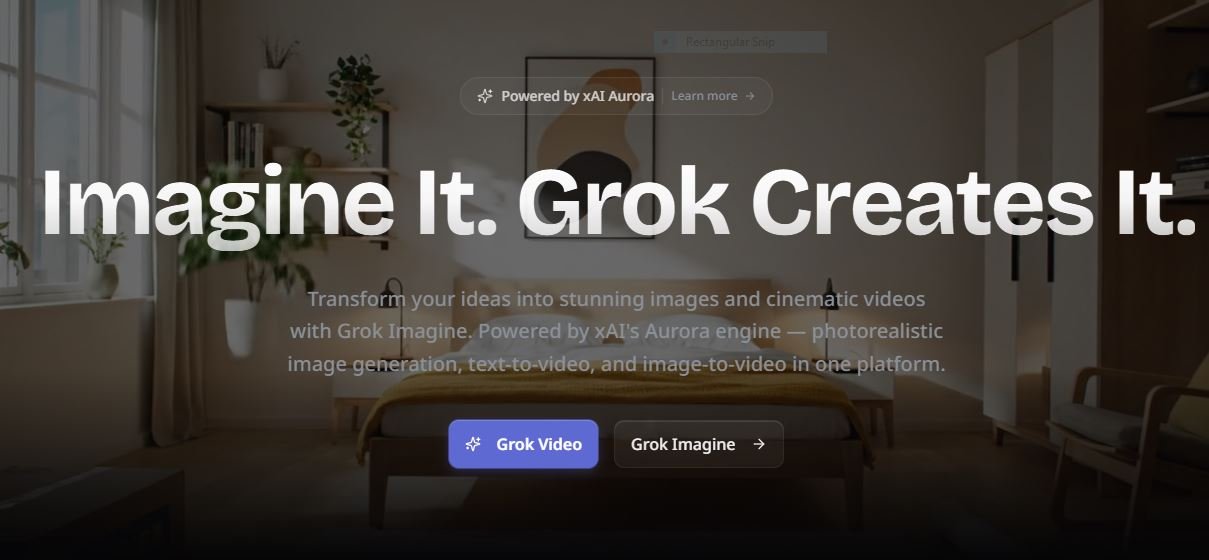
This is where specialized image generation tools become invaluable. Instead of struggling with the blank page, a writer can use a sophisticated platform like Grok Imagine to generate dozens of high-quality character concepts, outfit variations, and dynamic poses within minutes. This technology allows a storyteller to iterate on a character’s design instantly. Does the protagonist look better with a gothic-lolita aesthetic or a sleek, futuristic mecha suit? A writer can test these visual hypotheses in real-time, locking down a concrete visual identity before a single final page is drawn.
By having these AI-generated reference sheets, writers can communicate their vision to human illustrators with absolute clarity, ensuring that the final manga stays completely true to the original concept.
Read More: Exploring Modern Manga Trends: Stories, Styles, and Surprising Crossovers
The Secret Weapon for World-Building and Backgrounds
Ask any manga artist what the most grueling part of the job is, and the answer is almost universally the same: drawing backgrounds. Whether it is the sprawling, neon-lit streets of a cyberpunk metropolis, the ornate architecture of an Isekai magic academy, or the hyper-detailed interiors of a spaceship, backgrounds consume an immense amount of time and energy.
Many aspiring webtoon creators abandon their projects simply because the workload of drawing weekly backgrounds is too overwhelming for a solo artist. AI is stepping in to carry this heavy burden. Modern AI tools excel at understanding architectural styles, lighting, and perspective.
Creators are now using AI to generate complex, high-resolution environmental art. These generated landscapes can be used as direct assets for webtoons (especially in the scroll-down manhwa format, where cinematic establishing shots are crucial) or as perfectly scaled tracing references for traditional manga artists. By offloading the tedious rendering of brick walls, city skylines, and forest canopies to AI, indie creators can reserve their creative energy for what truly matters: character expressions, dynamic action choreography, and emotional storytelling.
Bringing Manga to Life: The Rise of the Indie Anime Trailer
In the highly competitive world of webcomics and indie manga, having a great story and beautiful art is only half the battle. Discoverability is the real challenge. How do you get readers to click on your series when there are thousands of others competing for their attention on social media?
The most effective marketing tool in the anime and manga community has always been the AMV (Anime Music Video) or the animated promotional trailer. A 30-second animated sequence with a great soundtrack can go viral on TikTok or Twitter, driving massive traffic to a manga’s first chapter. However, animation is notoriously one of the most expensive and specialized skills in the world.
Historically, an indie manga creator could never afford to produce an animated trailer for their self-published work. But the evolution of artificial intelligence has shattered this ceiling. The technology has rapidly advanced from generating static images to producing dynamic motion graphics.
By utilizing cutting-edge text-to-video or image-to-video models, such as the Grok Video AI platform, indie creators can now animate their static manga panels. Imagine taking a dramatic, still-image confrontation between a hero and a villain, and using AI to add flowing hair, glowing magical auras, and dynamic camera movements. These tools empower a single creator in their bedroom to produce captivating, anime-style promotional trailers that were previously the exclusive domain of massive studios like MAPPA or Ufotable.
The Ethical Collaboration: Enhancing Human Creativity
It is impossible to discuss AI in the manga community without addressing the valid concerns of artists. The fear that AI will replace human creativity is widespread. However, the most successful creators of tomorrow will be those who view AI not as a replacement, but as an advanced digital tool—much like how the industry transitioned from physical G-pens and screen tones to digital tablets and Clip Studio Paint.
AI cannot write a soul-stirring narrative, nor can it perfectly capture the nuanced, emotional pacing of a masterfully paneled manga page. What AI does exceptionally well is remove the tedious, mechanical barriers to creation. It is a storyboarding assistant, a color palette generator, and a world-building visualizer.
The Future Belongs to the Storytellers
We are entering a golden age for indie manga and webtoon creators. The democratization of visual production means that the industry will no longer be dictated purely by who has the most technical drawing skill or the biggest production budget.
Instead, success will be determined by the quality of the imagination. For the light novel writers, the fan-fiction authors, and the dreamers who have a universe trapped inside their heads, the tools now exist to bring those worlds to life. By embracing AI for character design, background generation, and video promotion, the next great manga masterpiece is just a prompt away.