The Digital Renaissance of Manga: Navigating the Complex Landscape of Modern Entertainment Hubs

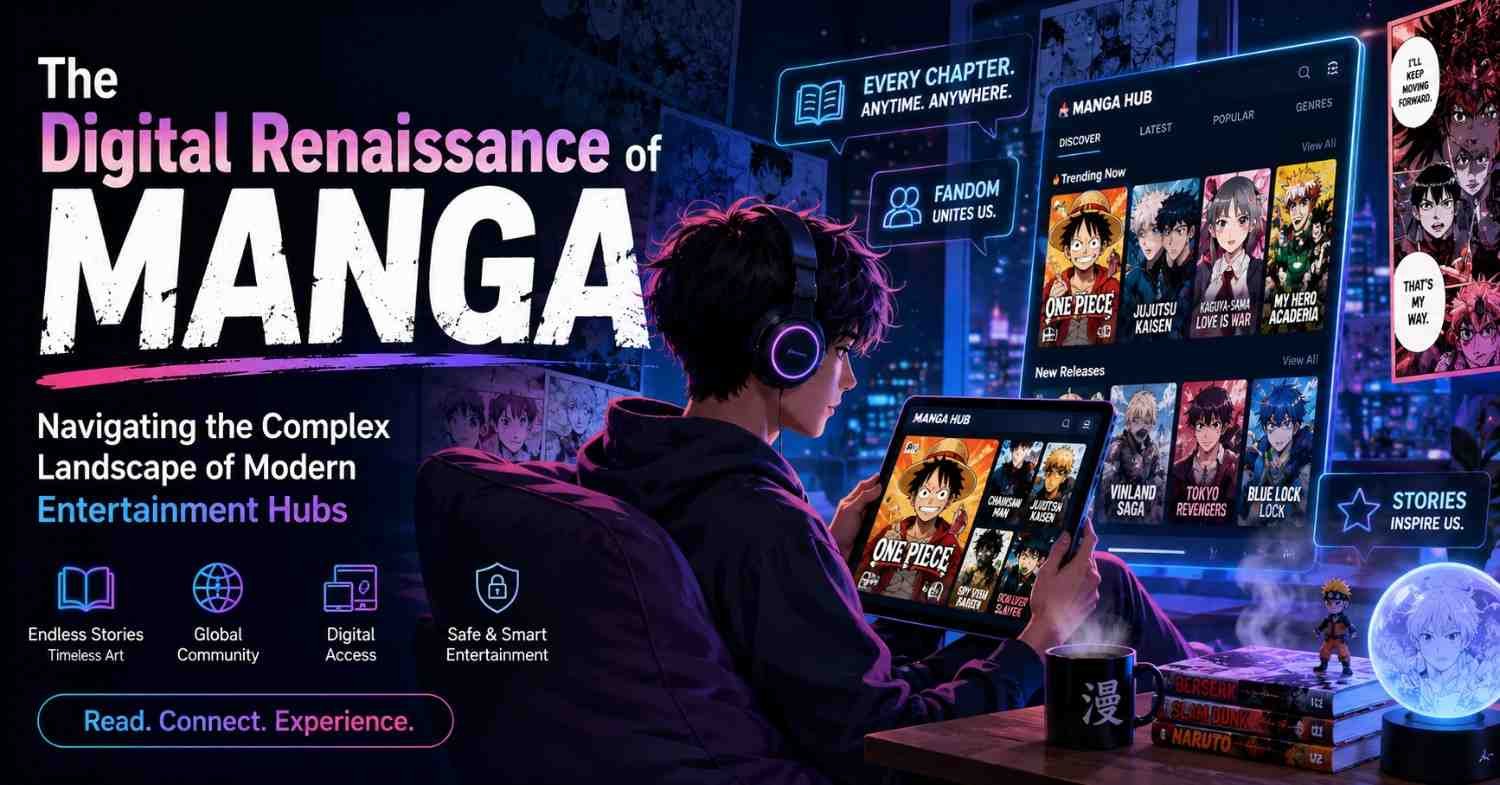
The global consumption of manga, anime, and digital comics has undergone a profound transformation over the last decade. What was once a niche subculture has exploded into a mainstream cultural phenomenon, transcending borders and language barriers. In 2026, the digital infrastructure supporting this passion has become more complex than ever.
Fans no longer rely on physical bookstores or a single television channel; instead, they navigate a vast, fragmented ocean of streaming platforms, fan communities, and digital archives. However, this expansion has brought a significant challenge: the difficulty of finding safe, organized, and high-quality access to the content we love. In this era of information overload, the role of curated entertainment hubs has become the backbone of the modern fan experience.
For the average manga enthusiast, the journey often begins with a simple search. Yet, the modern web is a double-edged sword. While it offers unparalleled access, it is also cluttered with low-quality mirror sites, intrusive advertisements, and misleading redirects that can ruin the immersive experience of reading a gripping story. The digital “search cost” for fans has risen significantly. Instead of spending their time analyzing character arcs or discussing plot twists, users often find themselves navigating a labyrinth of dead links and security warnings. This fragmentation not only frustrates the user but also isolates various fan communities, making it harder to foster a unified digital culture.
This is precisely where the concept of the “Entertainment Resource Hub” steps in to save the day. A well-constructed directory functions as a digital sanctuary for fans. Rather than leaving navigation to the whims of unpredictable search engine algorithms, these hubs provide a human-verified roadmap to the best the web has to offer. By utilizing an entertainment resource hub, fans can bypass the chaos and directly connect with high-tier streaming services, safe community forums, and verified news outlets. This organized approach ensures that the focus remains on the art and the story, rather than the technical hurdles of the internet.
The rise of these organized portals is particularly evident in the South Korean digital landscape, a region that serves as a global powerhouse for digital comics and webtoons. The pace of web innovation in Korea is staggering, with new platforms and communities emerging almost daily. To keep up with this high-speed environment, local netizens have developed a sophisticated system of navigation that is now being modeled globally. In the local digital culture, this curated gateway is commonly referred to as a 주소메뉴 (Juso-menu), which translates to an “address menu.”
The metaphor of a menu is incredibly apt for the modern internet user. When you enter a high-quality restaurant, you don’t want to go into the kitchen and search through hundreds of ingredients to make your own meal; you want a carefully selected list of the best options provided by an expert. A digital “address menu” provides exactly that. It categorizes the vast Korean web ecosystem—from webtoons and sports to technical forums and community boards—into a clean, intuitive interface. It transforms the act of “searching” into an act of “selecting,” which is a far more efficient and satisfying experience for the modern user who values their time.
Furthermore, we cannot ignore the critical importance of cybersecurity in the entertainment niche. Manga and anime fans are frequently targeted by malicious actors who use deceptive websites to harvest user data or deploy harmful scripts. For fans trying to access regional content or niche community discussions, the risk of stumbling onto a compromised domain is constant. A professionally managed directory acts as a crucial first line of defense. Because every link within a trusted portal is manually vetted for safety and authenticity, users can explore new digital territories with peace of mind. It is about creating a “Clean Room” environment for the internet, where the user knows that every outbound click leads to a secure destination.
The evolution of digital manga consumption also reflects a broader shift in user behavior. We are moving away from passive consumption and towards active, organized engagement. Modern fans are researchers; they want to know the latest industry news, find the best fan-translated projects, and engage in safe, moderated discussions. A centralized hub facilitates this by bringing all these disparate elements into one unified workspace. It is no longer just about reading a chapter of a manga; it is about the entire ecosystem of being a fan.
The mobile browsing revolution has further cemented the necessity of these platforms. On a smartphone, where screen real estate is limited and typing long URLs is tedious, a one-tap directory is an absolute game-changer. It offers a streamlined User Experience (UX) that traditional, ad-heavy search results simply cannot provide. For the busy professional or student who wants to catch up on their favorite series during a commute, these curated gateways are an essential productivity tool.
In conclusion, the future of digital entertainment navigation lies in the hands of those who can organize and protect the user’s journey. As the world of manga and digital content continues to expand into the metaverse and beyond, the need for human-verified, secure, and intuitive directories will only grow. By embracing organized hubs, the global fan community can ensure that the “Beautiful Game” of digital storytelling remains accessible, safe, and enjoyable for everyone. The digital renaissance is not just about more content; it is about better, more organized access to the art that inspires us.