Hiring can be expensive, time-consuming, and uncertain, especially for growing businesses and startups. A candidate may interview well, present a polished resume, and still turn out to be a poor fit for the daily demands of the role. That is why many employers are looking for ways to make hiring decisions more consistent, practical, and evidence-based.
The Problem With Guesswork in Hiring
Every hiring manager has experienced uncertainty during the selection process. Two candidates may seem equally qualified, or one applicant may be impressive in conversation but difficult to evaluate beyond first impressions.
Common hiring challenges include:
- Overvaluing interview performance
- Comparing candidates inconsistently
- Missing important role-specific abilities
- Making decisions based on limited information
- Discovering performance gaps after onboarding
None of these issues mean interviews are useless. Interviews are still important. But they work best when combined with tools that reveal how candidates may perform in real workplace situations.
What Candidate Testing Can Reveal
A strong hiring process should help answer one central question: can this person succeed in the role?
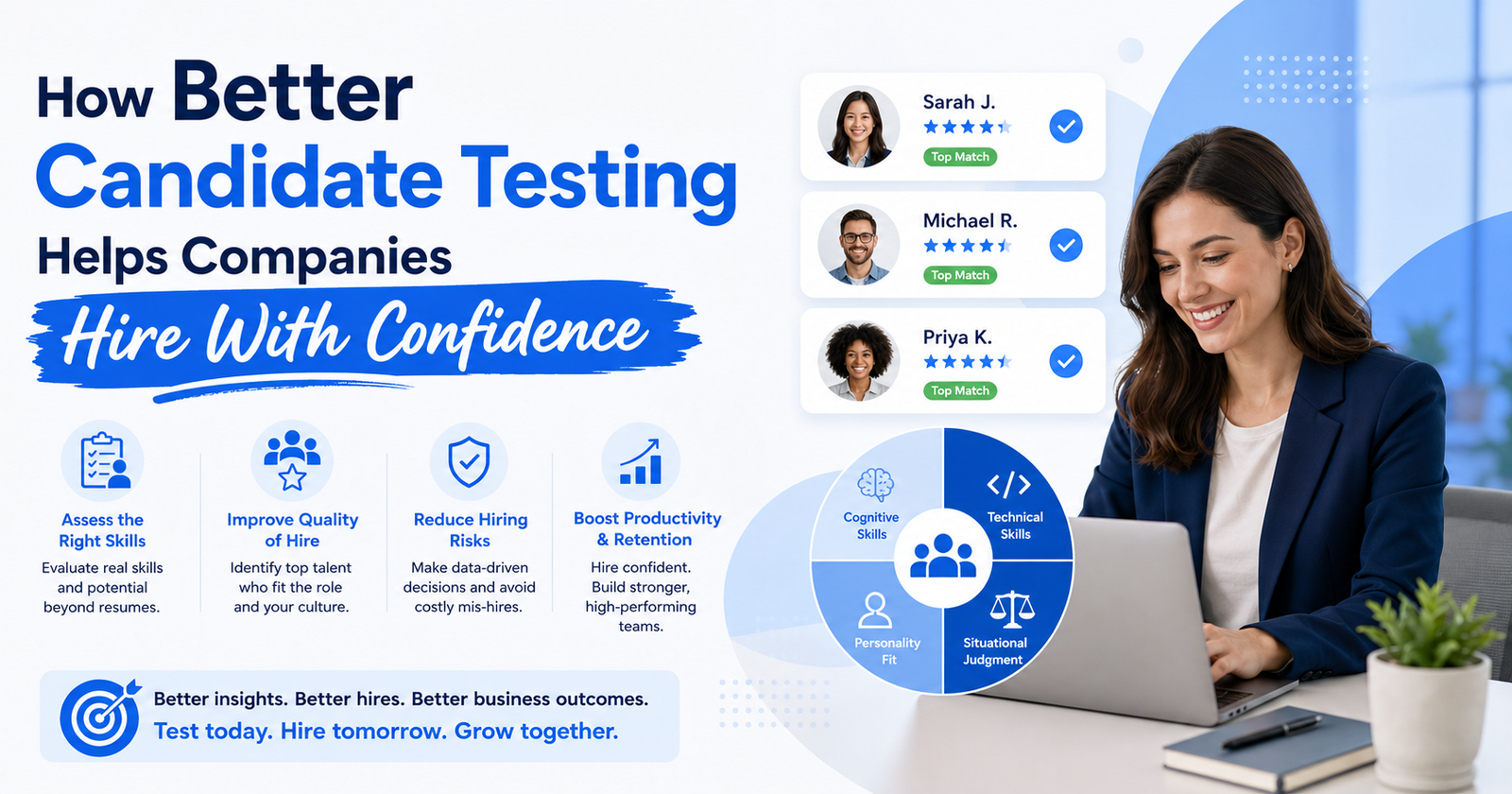
That question usually involves more than education or past job titles. Depending on the position, employers may need to evaluate communication, decision-making, attention to detail, problem-solving, customer focus, leadership potential, or technical knowledge.
This is where pre employment candidate testing can support better hiring decisions. When designed around job-related competencies, testing gives employers a clearer view of how applicants think, respond, and apply their abilities before an offer is made.
Matching Tests to the Role
Not every job requires the same evaluation method. A warehouse supervisor, sales representative, call center agent, and executive assistant all need different strengths. Testing should reflect those differences.
For Customer-Facing Roles
Employers may want to evaluate listening skills, patience, empathy, and judgment in difficult situations. A candidate who can stay calm and solve problems professionally may be more valuable than one with only technical knowledge.
For Administrative Roles
Accuracy, organization, prioritization, and attention to detail often matter most. Testing can help reveal whether a candidate can manage routine tasks without frequent errors.
For Leadership Roles
Managers need more than task completion skills. They need coaching ability, decision-making, accountability, and communication. A thoughtful assessment process can help identify whether a candidate is prepared for those responsibilities.
Making the Process Fair and Consistent
One major advantage of candidate testing is consistency. When every applicant completes the same job-relevant evaluation, hiring teams have a more objective basis for comparison.
This can reduce overreliance on personal preference or interview chemistry. It also helps hiring managers stay focused on the requirements of the role instead of being distracted by unrelated factors.
For testing to be fair, employers should:
- Use assessments connected to actual job duties
- Apply the same process to comparable candidates
- Explain the purpose of the test clearly
- Avoid overly long or confusing evaluations
- Review results alongside interviews and experience
Testing should support human judgment, not replace it entirely.
Improving Interview Quality
Candidate testing can also make interviews more useful. Instead of asking broad questions such as “Tell me about yourself,” interviewers can focus on specific areas that need clarification.
For example, if a candidate performs well on problem-solving but lower on communication-related scenarios, the interview can include questions about collaboration, conflict, or explaining complex information. If a candidate shows strong detail orientation, the interviewer can ask how that strength has helped them in previous roles.
This creates a more targeted conversation and gives candidates a better chance to explain their abilities.
Avoiding Common Testing Mistakes
Testing is most effective when it is purposeful. Problems arise when employers add assessments without a clear reason or use the same test for every position.
Common mistakes include using generic tests, failing to explain the process, ignoring candidate experience, or treating one result as final proof of success or failure. A test is only one piece of the hiring picture. It should be balanced with structured interviews, reference checks where appropriate, and a clear understanding of the role.
Conclusion
Strong hiring depends on more than instinct. By combining interviews, experience, and structured evaluation, employers can make decisions with greater confidence. Candidate testing helps reveal qualities that resumes may miss and gives hiring teams a more consistent way to compare applicants.
When used thoughtfully, it can improve role fit, reduce hiring uncertainty, and support stronger long-term performance.